

 Español
 Francés
 Português
 Italiano
 Türk
Türk
 العربية
 Русский
 한국어
한국어
 日本語
日本語

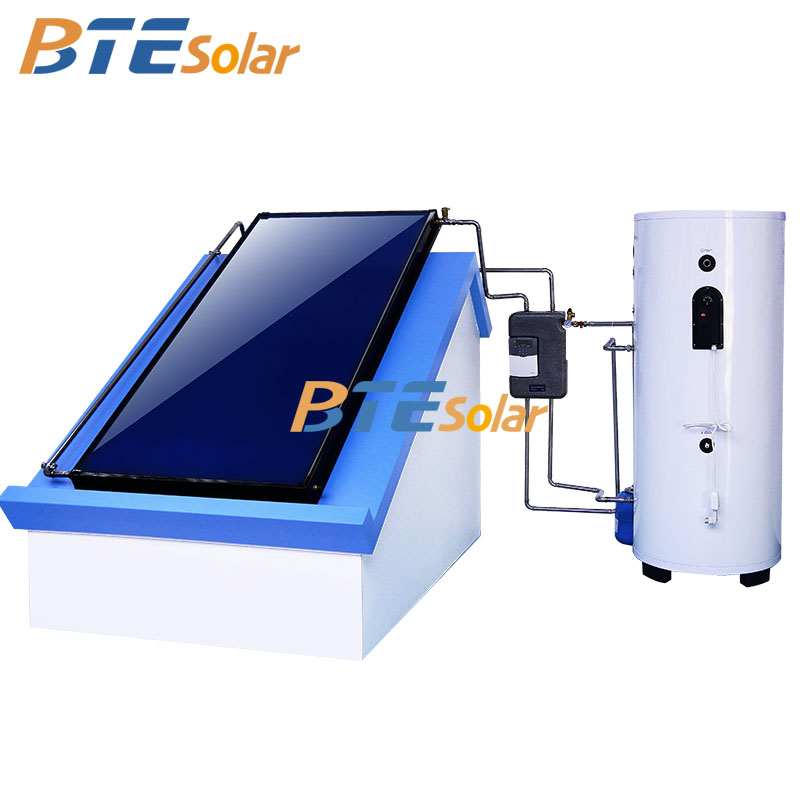

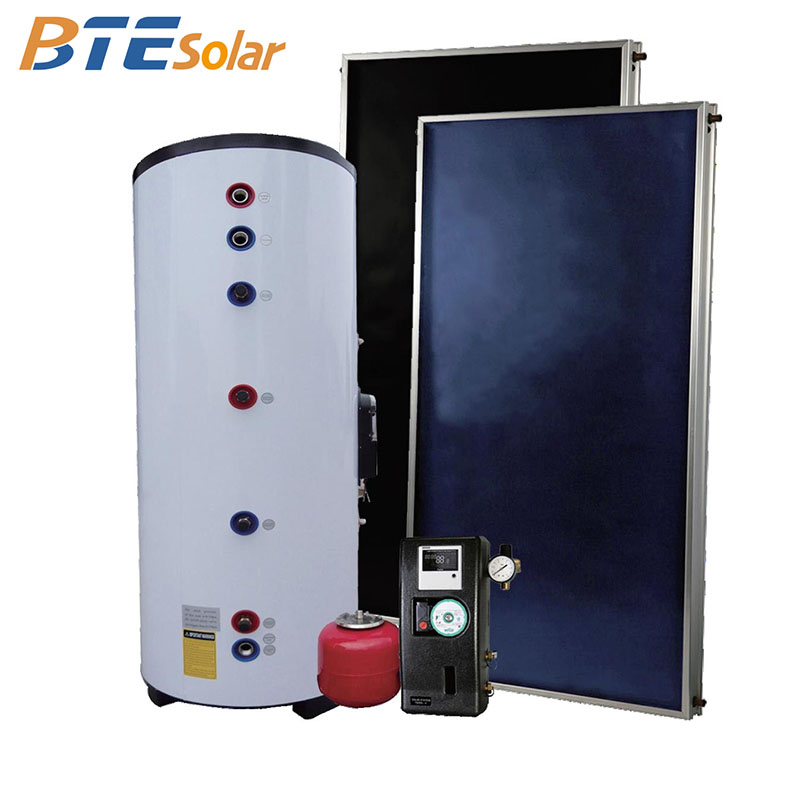
Split System Water Heater
Manufacturing Process
Design validation: thermal simulation + tank stress analysis
Collector assembly / Heat pump fabrication: brazing, leak testing
Water tank welding: argon arc welding + X-ray inspection
Internal coating: enamel firing ≥850°C or SUS316L polishing
Pressure test: hydrostatic test ≥1.0–1.2 MPa
Electrical and controller integration: function testing + calibration
System assembly and packaging: pipeline fittings + insulation inspection
Final QA: durability, freeze resistance, energy performance rating
Concise Definition
A Split System Water Heater is an engineered hot water solution consisting of separated components—typically an outdoor solar collector or heat pump unit and an indoor insulated storage tank—designed for efficient thermal conversion, reduced roof load, and optimized installation flexibility for commercial buildings.
Technical Specifications
System Type: Split design (solar/heat pump + storage tank)
Energy Source: Solar thermal or air-source heat pump
Tank Volume: 150–5000 L, modular scalability
Thermal Efficiency: 70%–85% for solar configuration
Compressor Efficiency (HP model): COP 3.2–4.5 (EN 16147 test)
Operating Temperature: 45°C–80°C
Auxiliary Heater: Electric or gas booster optional
Anti-corrosion Tank Material: SUS304/SUS316L or enamel coating
Control System: Intelligent circulation + freeze protection
System Lifespan: 12–20 years
Structure and Material Composition
Outdoor Unit — Solar collector / heat pump to absorb energy
Piping Circuit — Copper pipeline with insulation and glycol options
Indoor Water Tank — Pressure-rated with food-grade liner
Circulation Pump — Optimized flow rate for heat transfer
Controller — Differential temperature control + temperature sensors
Mounting System — Roof/ground support with corrosion resistance
Manufacturing Process
Design validation: thermal simulation + tank stress analysis
Collector assembly / Heat pump fabrication: brazing, leak testing
Water tank welding: argon arc welding + X-ray inspection
Internal coating: enamel firing ≥850°C or SUS316L polishing
Pressure test: hydrostatic test ≥1.0–1.2 MPa
Electrical and controller integration: function testing + calibration
System assembly and packaging: pipeline fittings + insulation inspection
Final QA: durability, freeze resistance, energy performance rating
Industry Comparison
| Technology | Split System Water Heater | Integral Solar System | Traditional Electric Heater |
|---|---|---|---|
| Roof Load | Low | High | Low |
| Hot Water Stability | High | Medium | High |
| Energy Efficiency | High | Medium–High | Low |
| Maintenance | Medium | Low–Medium | Low |
| Installation Flexibility | Excellent | Limited | Excellent |
Application Scenarios
Hotels, hospitals with continuous hot water consumption
Multi-family housing, commercial apartments
Educational facilities and dormitories
Industrial process water pre-heating
EPC tender projects for renewable energy upgrades
Core Pain Points and Solutions
High installation complexity → Pre-engineered connection kits reduce field errors
Heat loss over long pipe distance → Use thick insulation + optimized layout
Corrosion issues due to water hardness → Enamel/SUS316L with anode protection
Cold climate freeze risks → Glycol circulation or intelligent anti-freeze mode
Energy supply instability → Hybrid with grid or booster heater
Risk Warnings & Prevention
Incorrect roof load assessment → Require structural survey before installation
Improper pressurization → Ensure certified safety valves + expansion tank
Pipe leakage due to wrong fittings → Use O-ring certified for high temperature
Undersizing the system → Perform demand calculation based on peak load
Procurement & Selection Guide
Determine daily volume + simultaneous supply needs
Check COP (for heat pumps) or collector efficiency certifications
Choose appropriate tank material for water quality
Verify control system with freeze protection + fault monitoring
Evaluate installation environment and pipe length feasibility
Confirm after-sales and spare parts support for 10+ years
Review actual project references and performance data
Engineering Case Study
A residential complex with 280 units installed 80 split system water heaters (300 L tank + rooftop collector). Commissioning results:
Solar contribution ratio: 60%–75% annually
Peak hot water supply ensured through booster control
Energy operating cost reduced by approx. 40%
System payback: 3–4 years (based on electricity price)
FAQ
Q: What is the main benefit of a split design? A: Flexible installation with reduced roof load.
Q: Can it combine with a heat pump? A: Yes, hybrid systems are common.
Q: Required maintenance? A: Annual inspection of pump, valves, and sensors.
Q: Water quality requirements? A: Hard water needs corrosion-resistant tanks.
Q: Max pipeline distance? A: Typically ≤15–20 m depending on insulation.
Q: Can it operate without sunshine? A: Auxiliary heater ensures stable supply.
Q: Lifespan of tanks? A: 12–20 years depending on materials.
Q: Does noise matter for the outdoor unit? A: Heat pump noise 45–60 dB; solar systems silent.
Q: Government incentive eligibility? A: Certifications required for subsidy programs.
Q: Freeze protection? A: Glycol or electric anti-freeze mode based on climate.
Request Engineering Support
Contact us for Split System Water Heater design solutions, quotations, energy simulation reports, and engineering documentation for residential and commercial tenders.
E-E-A-T Author Credentials
Technical content developed by a certified renewable energy engineer with extensive experience in commercial hot water system design, procurement consulting, and EPC technical delivery for multiple international projects.


Honors and Qualifications:


