Español
 Francés
 Português
 Italiano
 Türk
Türk
 العربية
 Русский
 한국어
한국어
 日本語
日本語


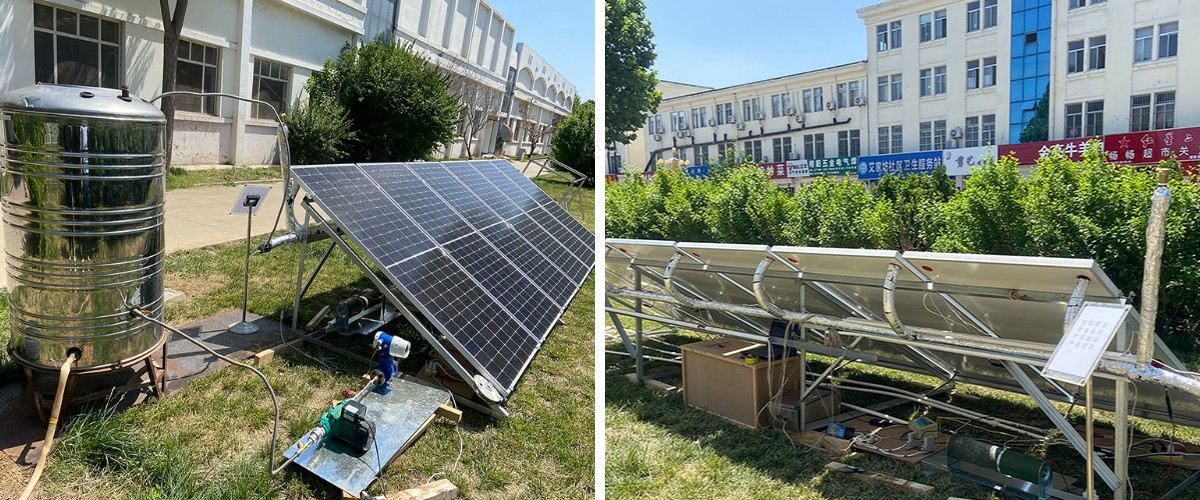
Photovoltaic Thermal System
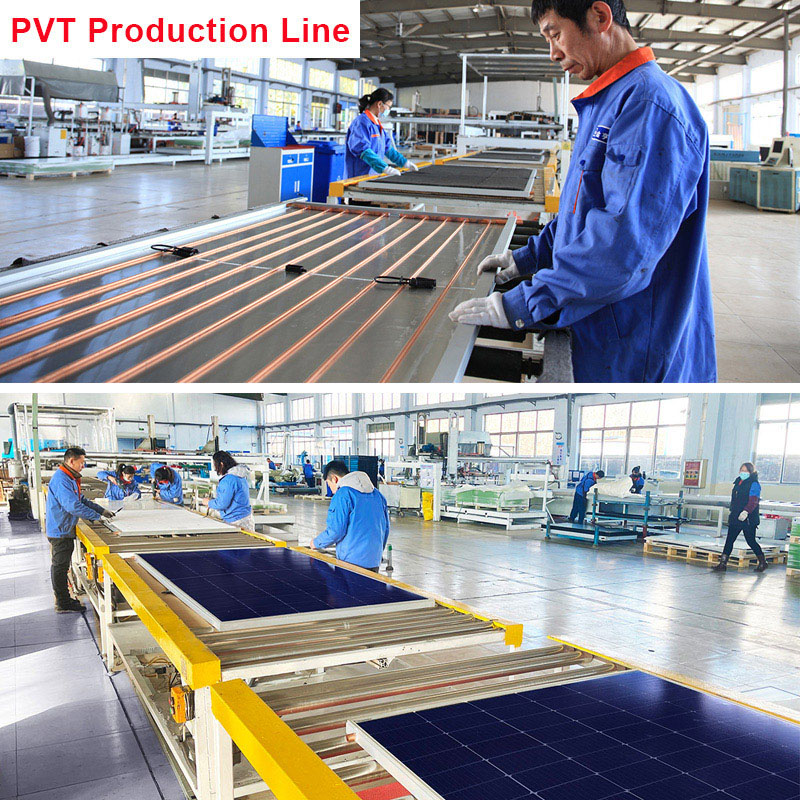
Engineering Production Workflow
Cell Stringing: PV cells electrically connected using automated tabbing machines.
Absorber Fabrication: Laser cutting and selective coating of copper or aluminum plates.
Tube Bonding: Ultrasonic or brazed attachment of heat exchange tubes to absorber plates.
Lamination: Vacuum lamination of glass, EVA, PV cells, absorber, and backsheet.
Frame Assembly: Mechanical fastening of anodized aluminum frames.
Hydraulic Testing: Pressure testing of fluid channels under 1.5× rated pressure.
Electrical Testing: Flash testing for voltage, current, and insulation resistance.
Final Inspection: Thermal imaging and visual inspection before packing.
Product Definition
A Photovoltaic Thermal System is an integrated solar technology that simultaneously generates electrical power and usable thermal energy from a single solar collector, improving total system efficiency for industrial, commercial, and residential energy applications.
Technical Parameters & Specifications
| Parameter | Typical Value |
|---|---|
| Electrical Conversion Efficiency | 15–22% |
| Thermal Efficiency | 45–70% |
| Total Energy Efficiency | 60–80% |
| Operating Temperature Range | 25°C to 95°C |
| Nominal System Voltage | 12–1000 V DC |
| Heat Transfer Fluid | Water or Water-Glycol Mixture |
| Flow Rate per Panel | 1.5–3.0 L/min |
| Maximum Working Pressure | 6–10 bar |
| Panel Dimensions (Typical) | 1650 × 990 × 40 mm |
| Service Life | 20–25 years |
Structure & Material Composition
Front Glass Layer: Low-iron tempered solar glass with high transmittance.
Photovoltaic Cells: Mono- or polycrystalline silicon laminated within EVA encapsulant.
Thermal Absorber Plate: Copper or aluminum plate with selective coating.
Heat Exchange Tubes: Copper or stainless-steel fluid channels bonded to the absorber.
Insulation Layer: Mineral wool or polyurethane foam to reduce rear heat loss.
Backsheet: Multi-layer polymer protective film for moisture resistance.
Frame: Anodized aluminum structure for mechanical stability.
Manufacturing Process
Engineering Production Workflow
Cell Stringing: PV cells electrically connected using automated tabbing machines.
Absorber Fabrication: Laser cutting and selective coating of copper or aluminum plates.
Tube Bonding: Ultrasonic or brazed attachment of heat exchange tubes to absorber plates.
Lamination: Vacuum lamination of glass, EVA, PV cells, absorber, and backsheet.
Frame Assembly: Mechanical fastening of anodized aluminum frames.
Hydraulic Testing: Pressure testing of fluid channels under 1.5× rated pressure.
Electrical Testing: Flash testing for voltage, current, and insulation resistance.
Final Inspection: Thermal imaging and visual inspection before packing.
Industry Comparison
| System Type | Electrical Output | Thermal Output | Total Efficiency | Typical Application |
|---|---|---|---|---|
| Photovoltaic Thermal System | Medium–High | High | 60–80% | Industrial and Commercial |
| Conventional PV System | High | None | 15–22% | Grid Power Generation |
| Solar Thermal Collector | None | High | 45–70% | Hot Water Only |
| Hybrid Heat Pump System | Medium | Medium | 40–60% | Buildings with HVAC |
Application Scenarios
Industrial Facilities: Process water preheating and thermal energy recovery.
Commercial Buildings: Domestic hot water supply and peak load reduction.
EPC Projects: Integrated renewable energy systems for energy performance contracts.
Institutional Facilities: Hospitals, schools, and public infrastructure hot water systems.
District Energy: Combined electrical and thermal supply for large campuses.
Core Pain Points & Engineering Solutions
PV Efficiency Loss Due to Heat: Active liquid cooling maintains optimal cell temperature.
Limited Roof Space: Dual-generation design maximizes energy output per square meter.
High Thermal Loss: Multi-layer insulation reduces rear and edge heat loss.
System Integration Complexity: Modular hydraulic and electrical interface design simplifies EPC installation.
Risk Warnings & Mitigation
Ensure correct antifreeze concentration in cold regions to prevent pipe rupture.
Install pressure relief valves to avoid overpressure conditions.
Perform regular inspection for scale buildup in heat exchange channels.
Provide earthing and surge protection to prevent electrical hazards.
Verify roof load capacity before installation of the system.
Procurement & Selection Guide
Define project electrical and thermal load profiles.
Calculate required collector surface area based on peak demand.
Verify compliance with IEC and ASTM mechanical and electrical standards.
Check hydraulic pressure rating and corrosion protection methods.
Confirm compatibility with existing boilers or heat pump systems.
Request factory test reports and third-party certification.
Evaluate supplier experience in EPC industrial-scale projects.
Engineering Case Example
A Photovoltaic Thermal System was installed in a 9,500 m² food processing factory requiring 65°C process water. The project integrated 240 hybrid panels, generating 120 kW of electrical power and 320 kW of thermal output. The system reduced boiler fuel consumption by 42% and stabilized process temperatures under continuous industrial operation.
FAQ
Can the system work in cloudy climates? Yes, it operates under diffuse solar radiation.
Is the thermal output stable? Yes, regulated through flow and temperature controls.
What maintenance is required? Annual cleaning and hydraulic system checks.
Can it integrate with existing boilers? Yes, via buffer tanks and heat exchangers.
Does it require special mounting? Standard solar mounting with reinforced brackets.
What is the typical ROI? 3–6 years depending on energy pricing.
Is antifreeze always required? Only in freeze-prone regions.
Can it operate at night? Only with thermal storage tanks.
Does it reduce PV panel degradation? Yes, by controlling cell operating temperature.
Is remote monitoring available? Yes, with IoT-enabled controllers.
Request Technical Support
For quotation, detailed technical datasheets, hydraulic schematics, or engineering samples, please submit your project requirements. Professional support is available for system sizing, EPC integration, and long-term operation planning.
E-E-A-T Author Credentials
This document is prepared by a renewable energy systems engineer with over 12 years of experience in hybrid solar, thermal integration, industrial energy systems, and EPC project engineering.