

 Español
 Francés
 Português
 Italiano
 Türk
Türk
 العربية
 Русский
 한국어
한국어
 日本語
日本語

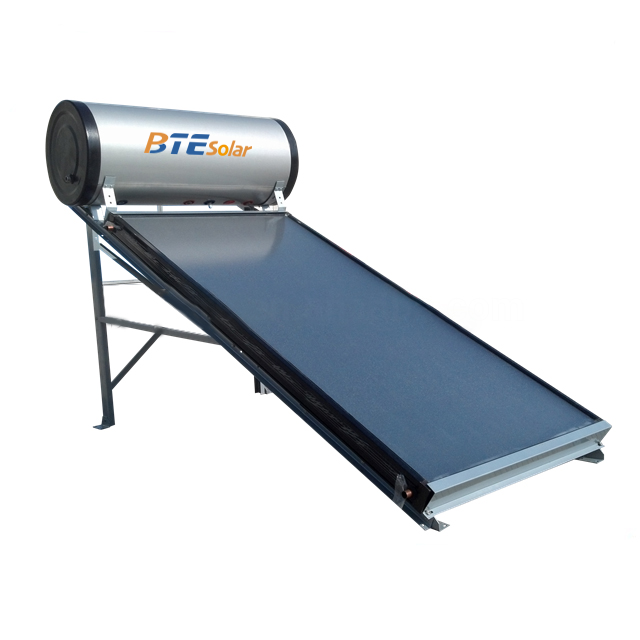


Solar Panel Water Heater
According to global solar thermal reports from major institutions such as **IEA** and **Solar Heat Worldwide**, the commercial solar water heating sector continues expanding due to rising fossil-energy prices and policy incentives. Industrial installations grow 6–9% annually, especially in agriculture, textiles, chemical processing, hotels, and district water supply. Many EPC contractors now integrate Solar Panel Water Heater systems with heat pumps to meet carbon-neutral requirements.
Concise Definition
A Solar Panel Water Heater uses solar thermal collectors to convert sunlight into usable hot water for industrial, commercial, and institutional applications. The system reduces operating costs, stabilizes high-volume hot water supply, and supports renewable-energy compliance across factories, hotels, farms, and district hot-water projects.
Working Principle & Core System Overview
A Solar Panel Water Heater captures solar radiation through flat-plate or evacuated-tube collectors, transfers heat to a circulating fluid, and stores it inside insulated tanks. With properly sized pumps, controllers, and exchangers, the system maintains high thermal efficiency even under fluctuating radiation conditions.
Technical Specifications
Typical industrial Solar Panel Water Heater configurations include:
• Collector thermal efficiency: 65%–78% (flat-plate), 70%–85% (evacuated tube)
• Operating temperature range: 45–95°C depending on design
• Heat-transfer fluid: water or water-glycol mixture
• Tank volume scaling: 1,000–30,000 L for industrial projects
• Controller accuracy: ±1°C
• Maximum system pressure: 6–10 bar
• Expected service life: 15–20 years
• Annual solar contribution ratio: 55%–90% depending on climate zone and design
Product Structure & Manufacturing Process
The system is composed of collectors, mounting structure, heat-transfer pipelines, pump stations, controllers, heat exchangers, and insulated storage tanks.
Manufacturing Process
1. **Collector fabrication**: copper/aluminum absorber plate welding, selective-coating application, vacuum sealing (for tubes).
2. **Tank manufacturing**: inner tank welding, anti-corrosion coating, polyurethane insulation injection.
3. **Frame construction**: anodized aluminum bracket cutting and bending.
4. **Piping preparation**: high-temperature copper pipes shaping and pressure testing.
5. **System assembly**: pump unit integration, controller programming, and hydraulic balancing.
6. **Final quality test**: thermal output verification, pressure test, and endurance test.
Market Trends & Global Demand
According to global solar thermal reports from major institutions such as **IEA** and **Solar Heat Worldwide**, the commercial solar water heating sector continues expanding due to rising fossil-energy prices and policy incentives. Industrial installations grow 6–9% annually, especially in agriculture, textiles, chemical processing, hotels, and district water supply. Many EPC contractors now integrate Solar Panel Water Heater systems with heat pumps to meet carbon-neutral requirements.
Industry Comparison Table
(All values reference commonly available industrial-grade solutions)
| Technology Type | Energy Efficiency | CapEx | O&M Cost | Best Application | Limitations |
|---|---|---|---|---|---|
| Solar Panel Water Heater | 65–85% | Medium | Very Low | Hotels, factories, farms | Weather-dependent |
| Electric Boiler | 95%+ | Low | Very High | Areas without sunlight | High energy bills |
| Diesel Boiler | 70–90% | Low | High | Industrial standby heating | Pollution & fuel volatility |
| Heat Pump | 250–450% COP | High | Low | Hospitals, residential | Higher upfront cost |
Real-World Application Scenario
An industrial laundry plant requiring continuous 60–85°C hot water installed a 200-collector Solar Panel Water Heater array. The system reduced energy bills by 62%, supplied 75% of annual hot water demand, and achieved ROI in 2.8 years. The plant integrated a backup diesel boiler to ensure uninterrupted operation during low-radiation days.
Engineering Calculation Example
Hot-water demand for a commercial facility:
• Daily water demand: 20,000 L
• Required temperature rise: 45°C
• Heating load = 20,000 × 4.186 × 45 = **3,766,800 kJ/day** ≈ **1,046 kWh/day**
• Collector area (average 550 W/m² output): Required ≈ **70–90 m²** depending on local radiation.
Risks & Solutions
• **Risk: Insufficient solar radiation** → Solution: oversize collectors by 15–20% or integrate hybrid heat pump.
• **Risk: Overheating in summer** → Solution: add heat dissipation mode and automatic stagnation protection.
• **Risk: Glycol degradation** → Solution: scheduled replacement every 3–5 years and proper expansion tank design.
• **Risk: Scale buildup** → Solution: closed-loop design + anti-corrosion tank coatings.
Step-by-Step Practical Installation Workflow
1. Conduct solar resource assessment (GHI, DNI, seasonal variation).
2. Calculate load, tank volume, and solar fraction target.
3. Select collector type and define installation angle (latitude ±10°).
4. Plan hydraulic layout, pump head, and flow rate.
5. Install mounting structure with structural load verification.
6. Connect piping, insulate all hot-water lines, pressure-test system.
7. Program controller and test stagnation protection.
8. Commissioning and performance validation under real-load conditions.
Selection Guide
1. Choose collector type based on climate: evacuated tubes for cold regions, flat-plate for stable climates.
2. Ensure collectors meet certified performance standards (e.g., SRCC, Solar Keymark).
3. Verify tank insulation thickness ≥ 55–70 mm PU foam.
4. Select industrial-grade pumps with ≥20,000-hour design life.
5. Ensure system supports remote monitoring for EPC projects.
6. Confirm the supplier offers engineering drawings and load calculations.
7. Evaluate maintenance intervals and replacement part availability.
FAQ
1. How long does a Solar Panel Water Heater last?
Typically 15–20 years with proper maintenance and glycol replacement cycles.
2. Can it operate in winter or cloudy days?
Yes. Modern collectors maintain output under diffuse radiation, and hybrid backup systems ensure 24/7 hot water.
3. What industries benefit most?
Hotels, hospitals, food processing, agriculture, pharmaceutical plants, and textile factories.
4. How is the system maintained?
Check pressure, pump performance, glycol quality, and tank insulation every 6–12 months.
5. What is the solar fraction?
The percentage of total hot-water demand met by solar energy; typically 55–90% depending on design.
6. Can it integrate with heat pumps?
Yes. Hybrid systems increase efficiency and ensure stable output in low-sun conditions.
7. What certifications should buyers check?
SRCC, Solar Keymark, ISO 9806 collector test standards.
8. Does hard water affect performance?
A closed-loop system with heat exchanger prevents scaling inside collectors.
9. What is the ideal installation angle?
Generally latitude ±10° depending on seasonal load requirements.
10. What is the payback period?
Industrial systems typically achieve ROI in 2–4 years based on local energy prices.
Business-Focused CTA
For wholesalers, EPC contractors, and project developers seeking high-efficiency Solar Panel Water Heater systems with engineering support, scalable designs, and competitive pricing, contact our technical team to receive project simulations, collector configuration proposals, hydraulic diagrams, and distributor-level quotations for industrial applications.
Author & Expertise
Written by a Renewable Energy Systems Engineer with 12+ years of industrial solar-thermal design, manufacturing, and EPC integration experience. Technical review based on global insights from **IEA** and **Solar Heat Worldwide** industry reports.


