Español
 Francés
 Português
 Italiano
 Türk
Türk
 العربية
 Русский
 한국어
한국어
 日本語
日本語



Solar Hybrid PVT System
Advantages:
1. Supports dual-energy output: simultaneous power generation (PV) and heat generation (solar thermal energy).
2. Space-saving: Integrated design reduces rooftop footprint.
3. Applications: Waste heat can be used for domestic hot water, heating, or industrial processes.
4. Economical and energy-saving: Comprehensive energy savings accelerate cost recovery.
5. Easy installation: Integrated structure reduces wiring and installation complexity.
Product Introduction:
Solar Hybrid PVT System is the core component of photovoltaic and thermal integration technology. It integrates light, electricity and heat into one, and achieves efficient energy utilization through photoelectric conversion and thermal energy collection.
Solar photovoltaic/thermal (PV/T) technology combines photovoltaic and solar thermal energy to achieve higher solar energy utilization efficiency.
Product parameter table:
Specification of PVT
Item | Liquid circulation | Liquid circulation | liquid circulation | |
Dimension(mm) | 2279×1134×37 | 2279×1134×37 | 1762×1134×37 | |
Dimension of Glass (mm) | 2273×1128 | 2273×1128 | 1756×1128 | |
Weight(kg) | 39.0 | 39.0 | 34.6 | |
Electricity | Peak Rate/W | 580 | 540 | 450 |
Component type | Single crystal/multiple main gate/N type TOPCon | Single crystal/multiple main gate /P type PERC | Single crystal/multiple main gate /N type TOPCon | |
Component structure | 144(6×24)cells | 144(6×24)cells | 108(6×18)cells | |
Operating Temperature /℃ | -40~85 | -40~85 | -40~85 | |
Max system voltage/V | 1500V(TUV) | 1500V(TUV) | 1500V(TUV) | |
Open Circuit voltage (Voc)/V | 51.1 | 49.73 | 39.78 | |
Max power point operating voltage (Vmp)/V | 44.45 | 41.13 | 33.21 | |
Short Circuit Current (Isc)/A | 14.31 | 13.89 | 14.00 | |
Max power operating current (Imp)/A | 13.05 | 13.13 | 13.55 | |
Module efficiency | 22.44% | 20.9% | 22.5% | |
Thermal | Thermal peak efficiency(W) | 1180 | 1180 | 910 |
liquid capacity(L) | 1.2 | 1.2 | 0.95 | |
Medium type | Propylene glycol /glycol /water | |||
Work pressure(MPa) | 0.6 | |||
How it works | Indirect expansion type | |||
Interface /Quantity | G1/2 male thread / 2 | G1/2 male thread / 2 | G1/2 male thread / 2 | |
Heat transfer structure | Tube plate | Tube plate | Tube plate | |
Heat transfer material | Red copper | Red copper | Red copper | |
Back sheet material | Color-coated sheet | Color-coated sheet | Color-coated sheet | |
Quantity for 40HQ | 28 pcs/pallet,560pcs/40HQ | 28 pcs/pallet,560pcs/40HQ | 28 pcs/pallet,700pcs/40HQ | |
Application Scenario | Low temperature radiant heating/pool heating/interseasonal heat storage/Combined with heat pump | |||
Remark:
1. Integrated, high income: photoelectric, photothermal integrated coupling design, make full use of solar energy resources, the same area of more income.
2. Reliable and long life: reduce the working temperature of the surface of the solar module, improve the working condition, extend the service life and obtain more power generation
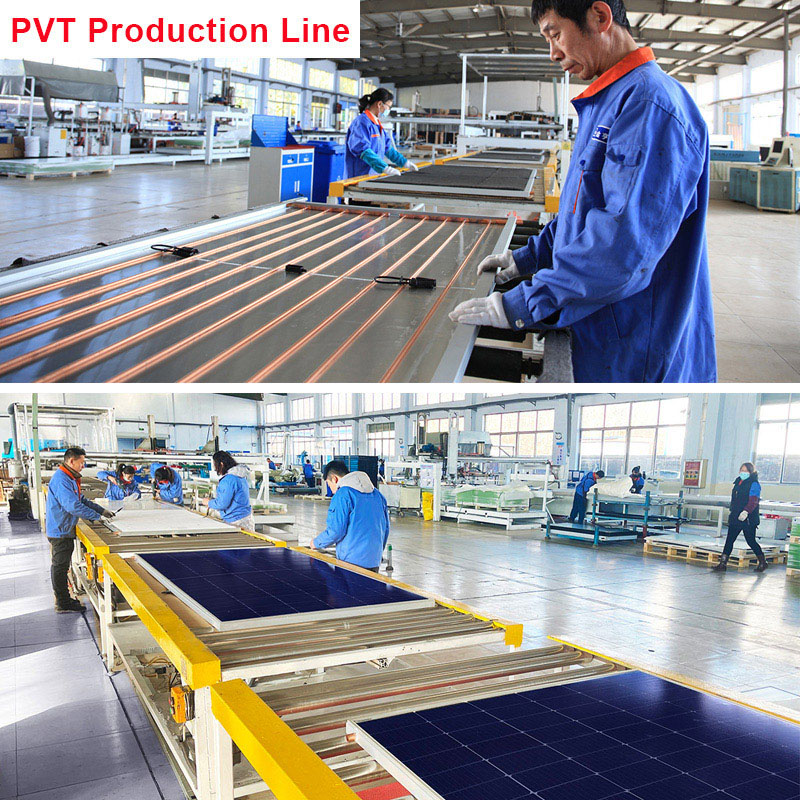
3. Precision, high performance: The use of half a single crystal multi-main gate N-type TOPCon battery, partition temperature and no hidden crack laminated heat transfer process, close-packed heat exchange runner layout, two EL detection, two air tightness detection, one insulation resistance test, excellent process stability.
Working Principle:
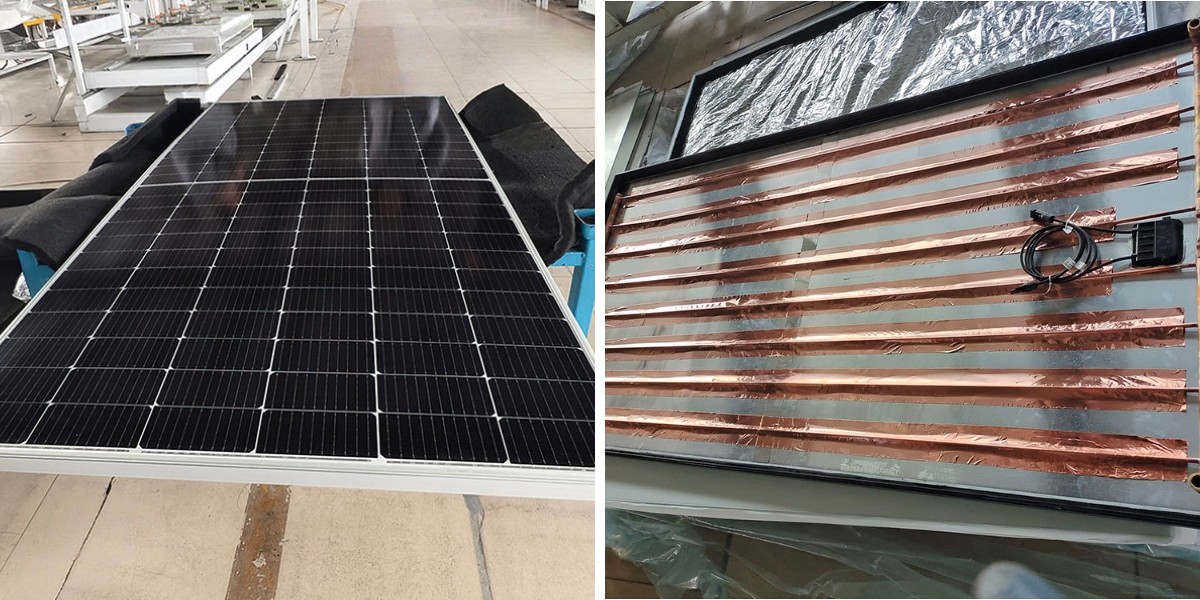
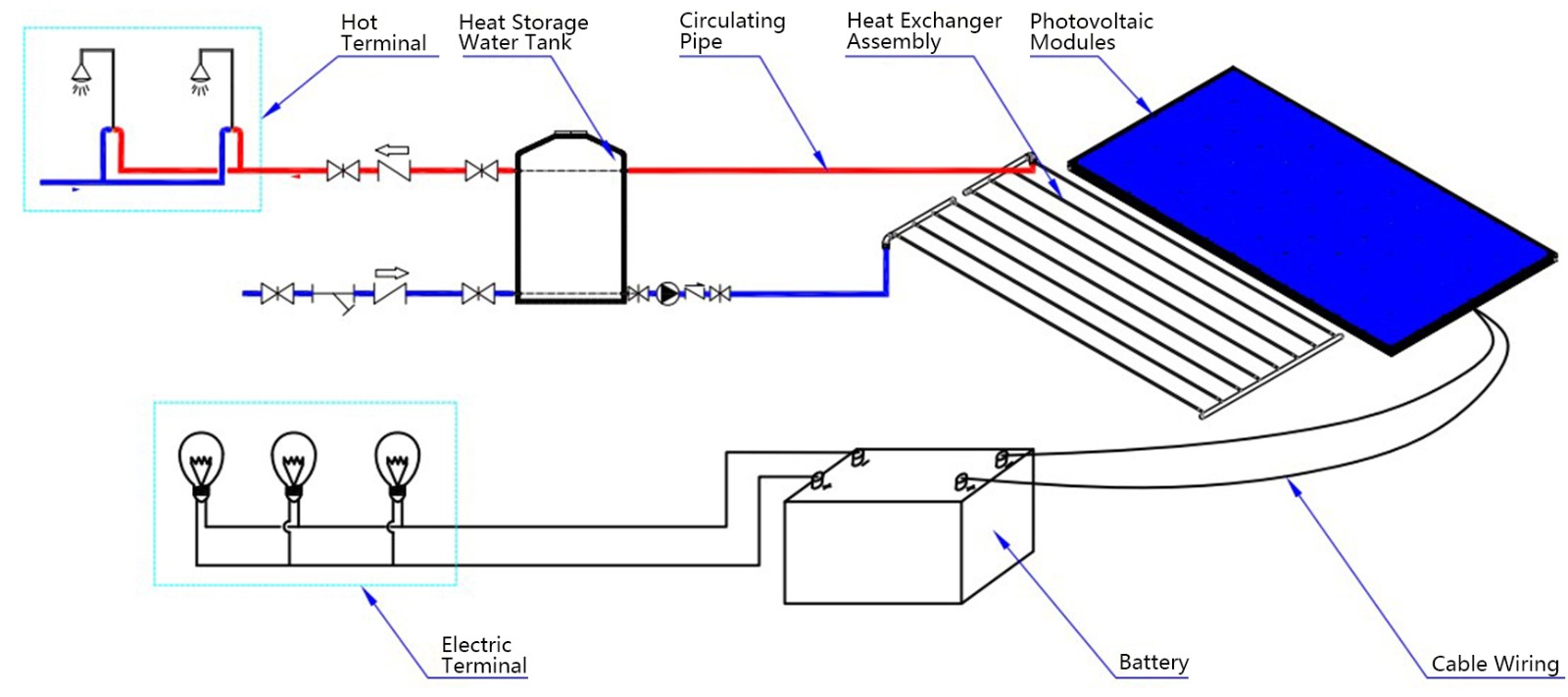
When exposed to sunlight, photovoltaic cells convert light energy into electricity, while heat is collected by heat-absorbing aluminum plates and copper tubes. A full back-flow system reduces module temperature, improving power generation efficiency by 8%-15%.
Core Structure:
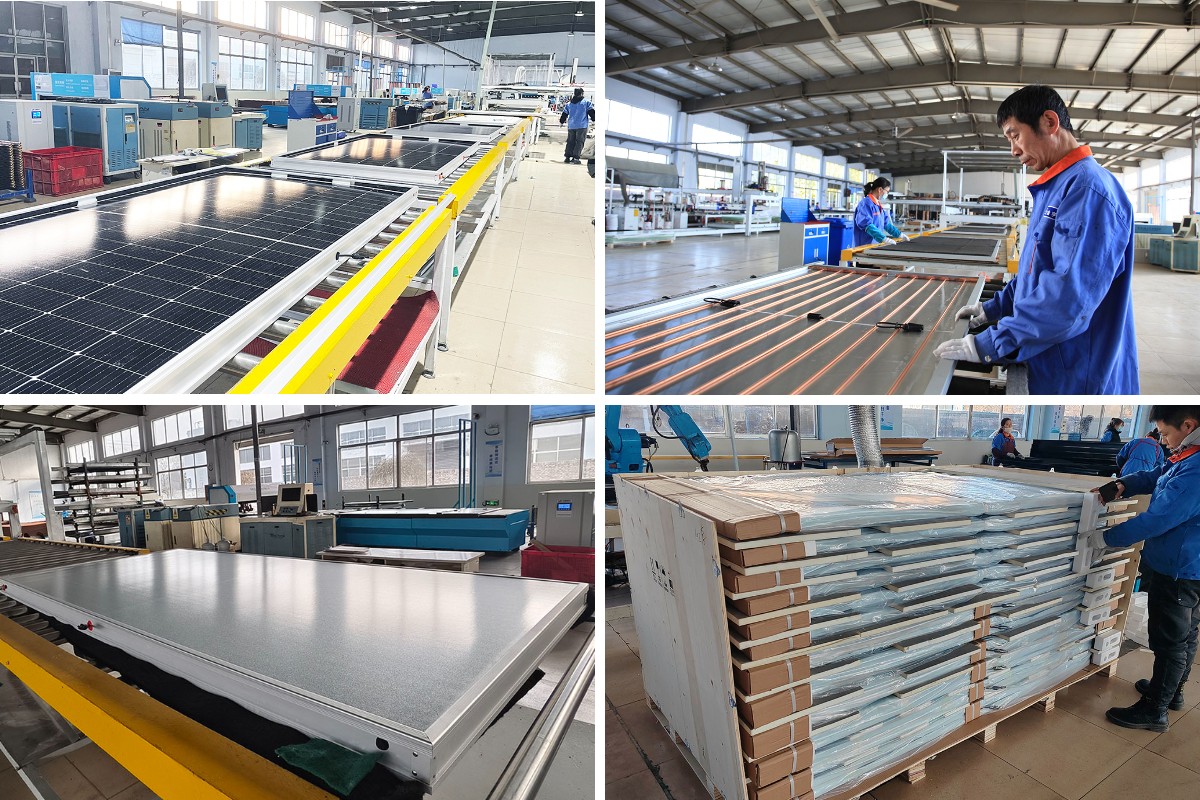
A Solar Hybrid PVT System primarily consists of a glass cover, EVA film, photovoltaic cells, heat-absorbing aluminum plates, and a TPT insulation layer. The photovoltaic cells convert light into electricity, while the heat-absorbing aluminum plates and copper tubes collect heat. The glass cover and insulation provide insulation.
Application Scenarios:
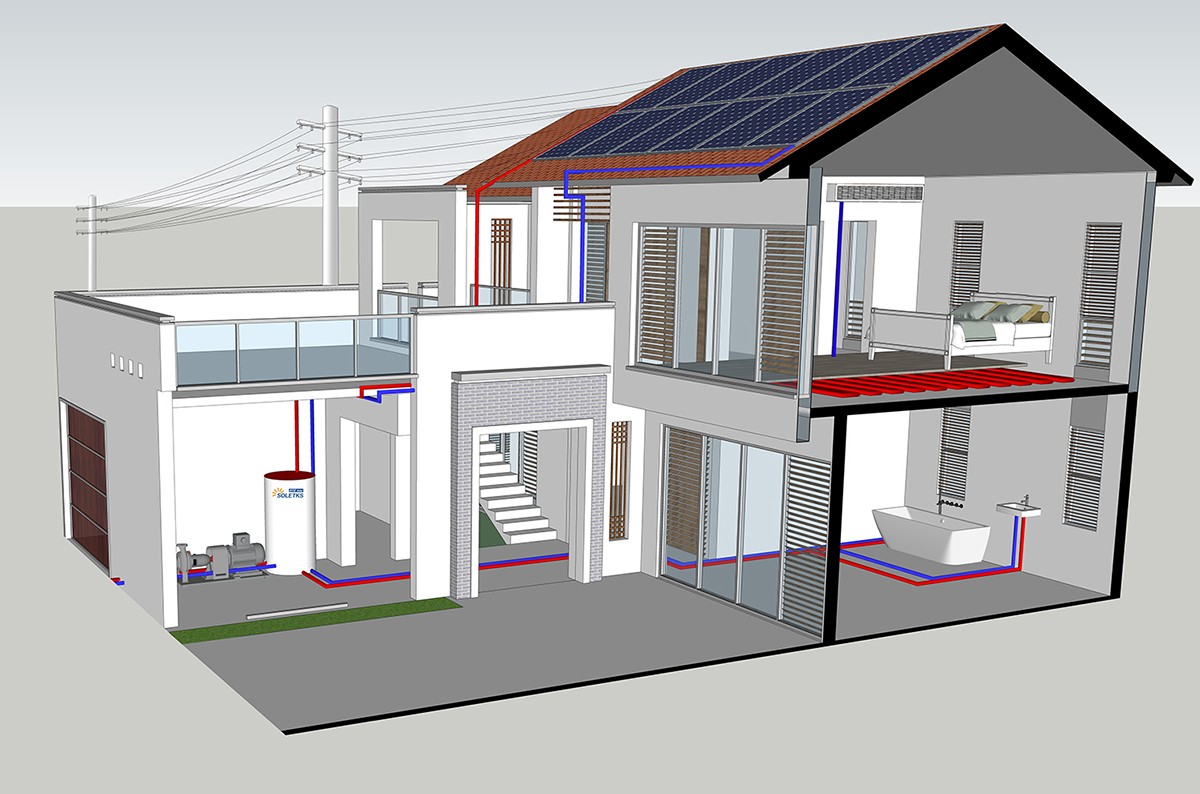
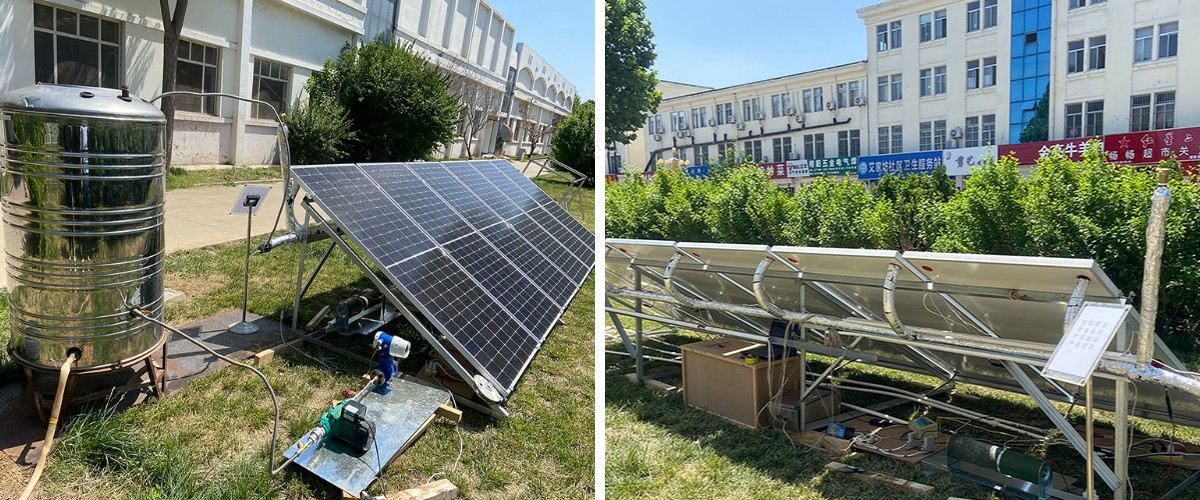
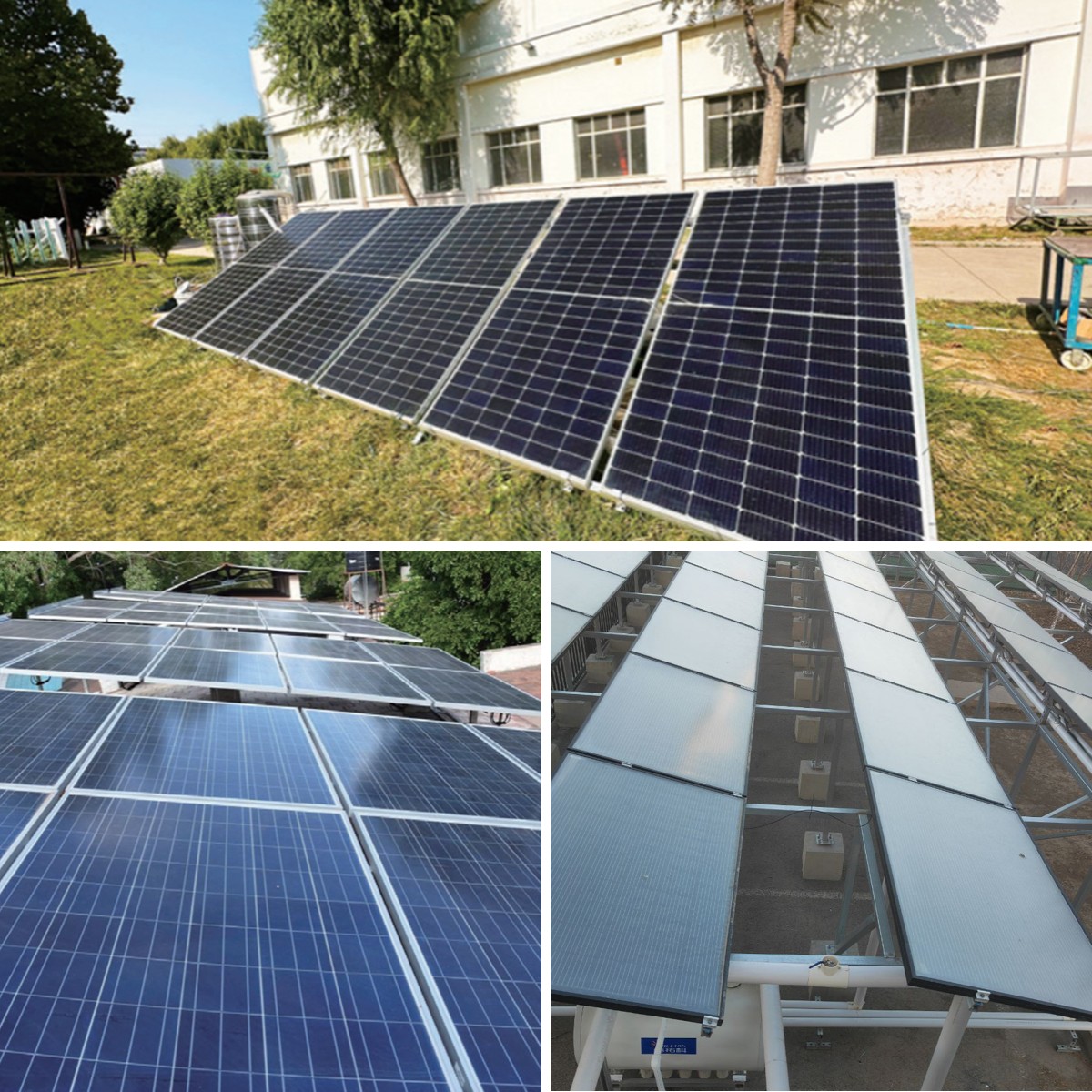
Solar Hybrid PVT System are often combined with heat pump systems to create a PVT heat pump system, which simultaneously generates electricity and provides hot water or heating, with an overall efficiency of up to 64%. This system is suitable for both urban and rural areas, with a typical payback period of 2-5 years.
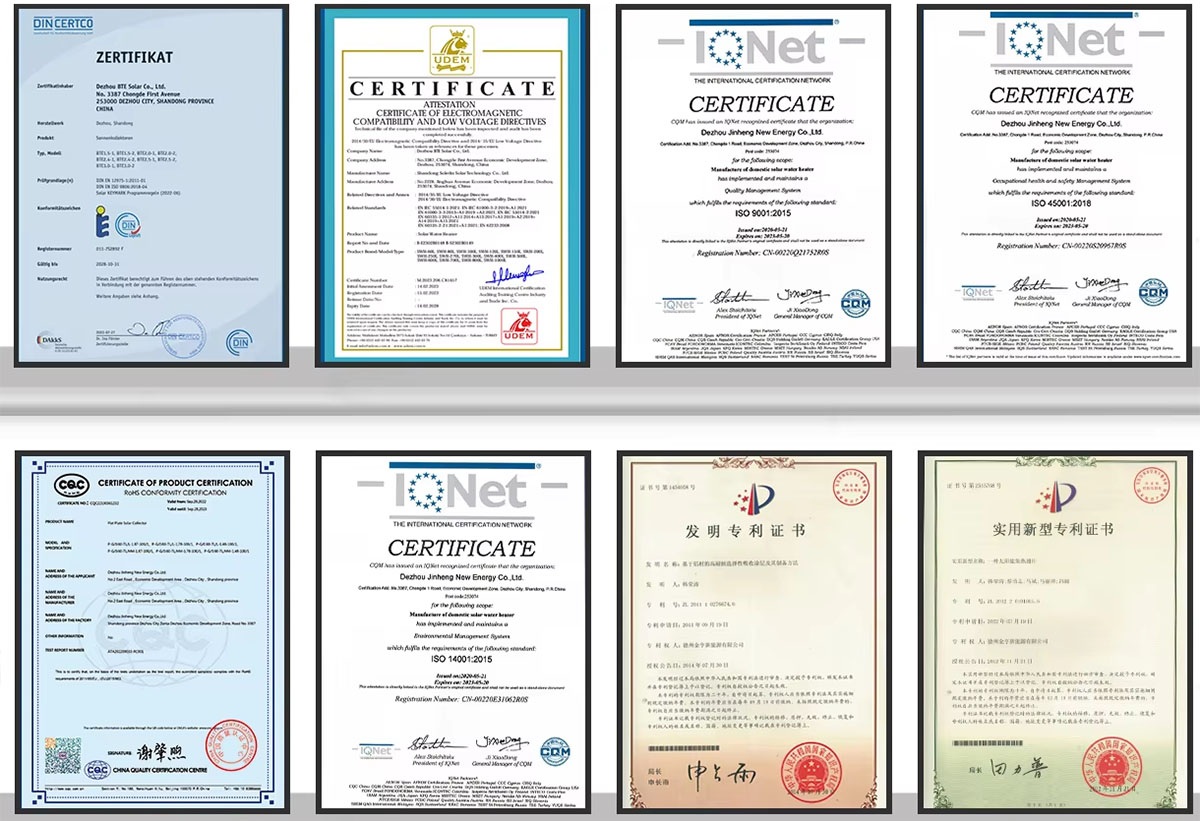
Related certificates: