

 Español
 Francés
 Português
 Italiano
 Türk
Türk
 العربية
 Русский
 한국어
한국어
 日本語
日本語


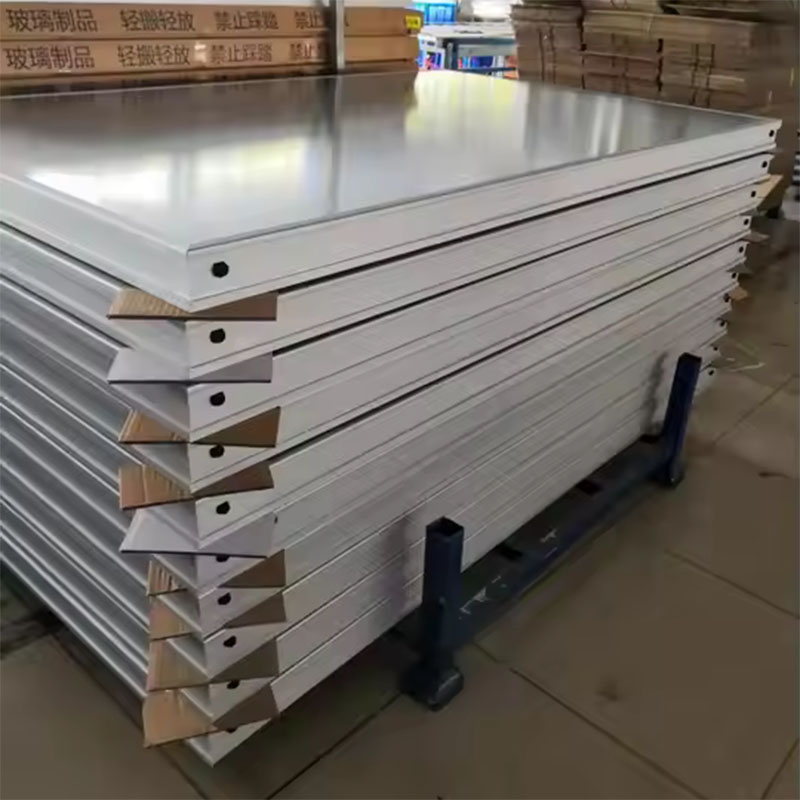
Flat Panel Solar Pool Heater
Product Advantages:
✅ Energy saving and efficient: solar energy+combined heat source, free solar thermal and low-cost operation.
✅ Green and environmentally friendly: zero emissions, no pollution, and no harmful substances produced during use.
✅ Intelligent temperature control: The intelligent temperature control system can accurately adjust the water temperature and provide comfortable water temperature around the clock.
✅ Safe and reliable: There are no safety hazards such as electric leakage or gas leakage, the system runs stably, is easy to maintain, and has a long service life.
✅ Flexible installation: The installation plan can be designed flexibly according to the size of the swimming pool and the site conditions.
Flat Panel Solar Pool Heater – Efficient & Eco-Friendly Pool Heating Solution:
eep your pool comfortably warm while saving energy with our Flat Panel Solar Pool Heater. Designed for maximum efficiency and durability, this system uses solar energy to extend your swimming season naturally.
Flat Panel Solar Pool Heater can significantly reduce swimming pool heating costs. The cost is competitive with both electric and gas pool heaters, and they have very low yearly operating costs. Actually, solar pool heating is the most cost-effective use of solar energy in many climates.
Key Features:
✔ High-Efficiency Flat Panels – Advanced absorber technology maximizes heat transfer for faster pool warming.
✔ Durable Construction – UV-resistant materials withstand harsh weather conditions for long-lasting performance.
✔ Easy Installation – Lightweight panels integrate seamlessly with existing pool filtration systems.
✔ Low Maintenance – No moving parts means hassle-free operation year after year.
✔ Cost-Effective – Reduce reliance on gas/electric heaters and lower energy bills by up.

System Operating Principle:
Sunlight heats water as it circulates through the solar panels.
Warm water returns to your pool, maintaining a consistent, comfortable temperature.
The typical solar pool heating system includes the following:
Solar collector — the collector transfers the heat from the sun to the pool water as it is being circulated
Filter — removes any foreign debris before water is circulated through the collector
Pump — circulates the pool water through the filter and collector and back to the pool
Flow control valve — there are two types, automatic or manual, which divert pool water through the solar collector.
The pool water passes through the filter followed by th the solar collector(s) by the pump. As the water passes through the collectors it is heated by the sun and then returned to the pool. During the peak of summer, the system can be used to cool the pool by circulating the water at night.
Some systems are automated through the use of sensors and an automatic valve which diverts water through the solar collector when its temperature is greater than that of the pool. If the collector temperature is the same or less than the pool temperature, pool water simply bypasses the collector(s).

Product Parameter Table:
Model | BTE-2.0 | BTE-2.5 | |
L x W x H(mm) | 2000x1000x80 | 2000x1250x80 | |
Overall area(m2 ) | 2.0 | 2.5 | |
Aperture area(m2 ) | 1.87 | 2.34 | |
Rated working pressure(MPa) | 0.6 | ||
Interface size | G3/4’’ | ||
Number of connections | 4 | ||
Frame color | Black/Oxidized white | ||
Maximum working temperature | 100°C | ||
Peak efficiency | 0.78 | ||
Rated efficiency ① | 0.53 | ||
Rated power(W)② | 400W/m² | 80.4 | 104.5 |
700W/m² | 512.4 | 665.8 | |
1000W/m² | 991.1 | 1287.9 | |
Note :
① Rated efficiency: The total irradiance on the daylighting surface of the collector is 1000W/㎡, and the temperature difference between the average temperature of the collector and the ambient air temperature is 50°C. Calculate the efficiency value of the solar collector according to the instantaneous efficiency equation of the collector's daylighting area.
② Rated power: The total irradiance of the collector lighting plane is 1000w/㎡, and the collector power when the temperature difference between the average collector temperature and the ambient air temperature is 50 ° C is equal to the product of the rated efficiency and theday lighting area and 1000W/㎡.
Production Process:

Applicable Scene:
Domestic hot water and commercial hot water projects.

Iinternational Certification:

Factory Strength Display:
Dezhou BTE Solar Co., Ltd. is founded in 2009, located in Shandong Province,China, which is an innovative company focused on the field of solar thermal applications and has a number of independently intellectual property rights in core technology. Relying on high advanced technical strength, we have independently developed the full automatic production lines, and production efficiency has reached the international level. Based on the idea of industrial 4.0, it has built a global professional solar thermal system in High , med Ium and low temperature like flat plate collector, U pipe collector, heat pipe collector and solar water heaters. Now BTE is not only a manufacture, also supply different energy saving solutions to global partners.
Now BTE products have pass Solar Key Mark and CE certificate. We have developed various solar collectors for different working temperature and circumstance. The solar thermal products include flat plate collectors, U pipe collectors, Heat pipe collectors, manifold collectors, compact pressurized and non-pressure solar water heater. We have cooperated with many home and abroad enterprises for long-term in solar system. We have been devoting ourselves to research, development and innovation of solar energy core technology. With the aim of creating professional flat plate collector producing base in the world, we will work to make the world more energy saving and beautiful with the cleaning circumstance.


